
Standing water, washed-out beds and puddles at entrances are more than an eyesore. In Central Florida, heavy summer storms can send a lot of water across a property fast, and when it has nowhere to go it damages landscaping, stains sidewalks, creates slip hazards and can work its way toward buildings. Oakcrest Outdoors installs French drains, catch basins, channel drains and other water diversion systems, and regrades problem areas, that move water where it belongs, for commercial properties and communities across Orlando, Kissimmee and Central Florida.
Signs Your Property Needs Better Drainage
- Puddles that stay on walkways, entrances or parking areas long after it rains
- Soggy, muddy lawn areas that never dry out
- Mulch and soil washing out of landscape beds
- Gutter downspouts dumping water next to the building or onto sidewalks
- Water pooling against foundations or walls
- Dead or struggling plants and grass in low spots
- Erosion along slopes, walkways or curbs
Our Drainage and Water Diversion Services
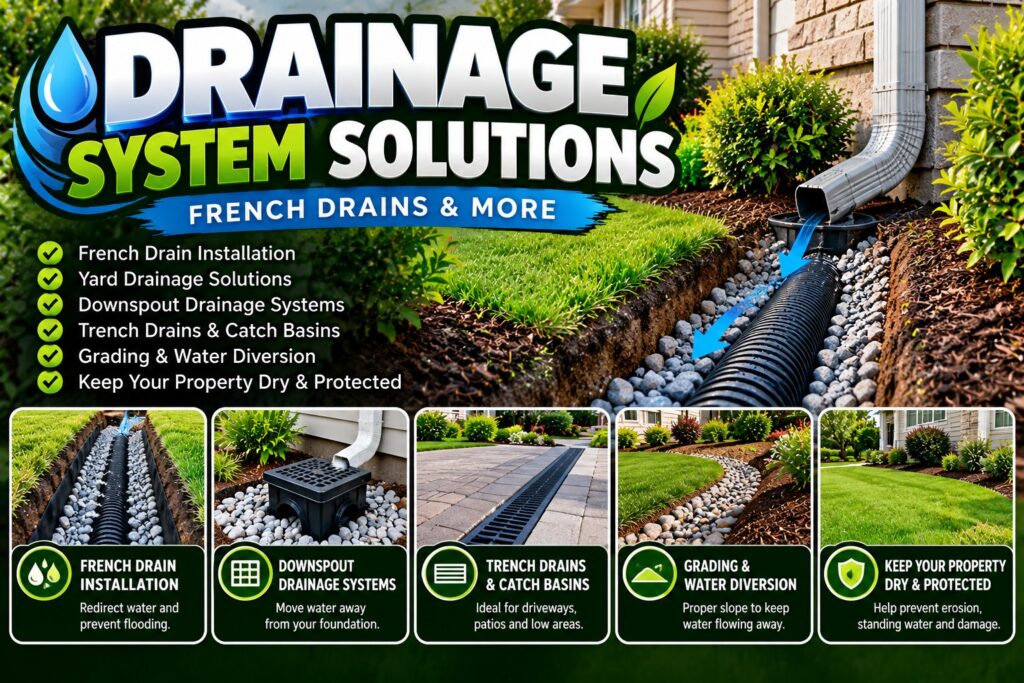
- French drain installation: a gravel-filled trench with perforated pipe that collects water from low, soggy areas and carries it away
- Downspout drainage: connecting gutter downspouts to buried pipe so roof water is carried away from the building instead of pooling at the base
- Catch basins: drain boxes set at low spots in lawns, beds and paved areas that collect surface water and send it into underground pipe
- Channel drains (trench drains): long, narrow grated drains installed across walkways, entrances, driveways and paved areas to catch water before it spreads
- Grading and regrading: reshaping the ground so water naturally flows away from buildings, walkways and problem spots
- Rerouting water away from problem areas: moving water away from walkways, entrances, buildings and landscape beds
- Fixing standing water and puddles in lawn and landscape areas
- Landscape restoration: replacing sod, plants and mulch once the water problem is solved
How a French Drain Works
A French drain is a shallow trench lined with fabric, filled with gravel and fitted with a perforated pipe. Water from the surrounding ground flows into the gravel, enters the pipe, and is carried by gravity to a better place to drain. Once the trench is covered, the system is mostly out of sight, and the area above can be finished with sod, rock or mulch.
Step by Step: How We Install a French Drain
- Look at the whole property. We find where the water is coming from, where it collects and where it can safely go, such as a swale, the street, a retention area or a dry well.
- Plan the route and the slope. We lay out the trench path, mark irrigation lines and have underground utilities located before any digging starts.
- Dig the trench. Most French drains are 12 to 24 inches deep and are dug with a steady downhill slope so water keeps moving instead of sitting in the pipe.
- Line it with filter fabric. Central Florida’s fine sand can clog a drain quickly. Wrapping the trench in fabric keeps sand and silt out of the gravel and pipe.
- Add gravel and perforated pipe. Clean drainage stone surrounds the pipe so water can flow in from every side.
- Connect it to an outlet. The water is sent to a pop-up emitter, catch basin, swale or dry well so it leaves the problem area for good.
- Restore and test. We backfill, replace the sod, mulch, rock or plants, repair any irrigation we moved, and run water through the system to make sure it drains.
Choosing the Right Solution
Every drainage problem is a little different, and many properties need a combination of fixes:
- Soggy ground that stays wet: a French drain
- Water collecting in one low spot: a catch basin tied into buried pipe
- Water running across pavement or into an entrance: a channel drain
- Roof water pooling at the building: downspout drainage lines
- Ground that slopes the wrong way: regrading
Our Process
- Site visit: we look at where the water comes from, where it collects and where it can safely go
- Clear plan and price: you get a written estimate before any work starts
- Installation: trenching, grading, drains, basins, pipe and connections done carefully around existing landscaping, irrigation and utilities
- Restoration: we put the area back together with sod, mulch or rock and plants, and clean up the site
Properties We Serve
- HOA and CDD communities
- Apartment complexes
- Office buildings and retail centers
- Commercial and industrial properties
Drainage work pairs well with our HOA landscape maintenance, landscaping and installation and commercial pressure washing services.
Built for Central Florida Soil and Storms
Drainage in Central Florida is different from most of the country. Our sandy soil, high water table and heavy afternoon storms mean water often has nowhere to soak in during the rainy season. A drain that is not wrapped in fabric, not sloped correctly or not connected to a good outlet can clog or back up within a season or two. We build every system with the right fabric, stone and slope, and add cleanouts where it makes sense so the drain can be flushed in the future.
What Affects the Cost of a French Drain
Most French drains we install run around $60 per linear foot, installed. Every property is different, so we give a free on-site estimate with a clear price before any work starts. The main things that affect the price are:
- How long the drain needs to be
- How deep it needs to go and what is in the ground (roots, rock or old debris)
- Where the water can be sent and the type of outlet needed
- Access, such as fences, narrow side yards or paved areas
- Adding catch basins, channel drains or downspout connections
- Restoring sod, plants, mulch or irrigation after the work
Areas We Serve
Oakcrest Outdoors installs drainage systems across Central Florida, including:
Orlando, Kissimmee, St. Cloud, Winter Garden, Winter Park, Lake Nona, Oviedo, Sanford, Apopka, Ocoee, Clermont, Altamonte Springs, Maitland, Casselberry, Longwood, Winter Springs, Celebration, Lake Mary, Davenport, Doctor Phillips and Windermere. See our full service area.
Frequently Asked Questions
What is the difference between a French drain and a downspout drain?
A French drain collects water that soaks into or sits on the ground. A downspout drain is a solid pipe that carries roof water from a gutter downspout away from the building. Many properties benefit from both.
Will a French drain damage my landscaping?
We work carefully around existing plants and irrigation, and we restore the area with sod, mulch, rock or plants when the job is done.
Can you fix puddles on a commercial property?
Yes. We look at why the water is collecting and recommend the right fix, often a French drain or rerouting downspout water away from the problem area.
When do I need a catch basin or a channel drain?
A catch basin works best where water collects in one low spot. A channel drain works best across a paved surface, such as an entrance, walkway or driveway, where water sheets across a wide area. We will recommend the right one after looking at the site.
Can regrading fix standing water?
Often, yes. When the ground slopes toward a building or holds water in a low area, reshaping it so water flows away can solve the problem on its own or alongside a drain.
How much does a French drain cost in Orlando?
Most French drains we install cost around $60 per linear foot, installed. For example, a 50-foot drain would be about $3,000. The final price depends on depth, access, the type of outlet and how much sod or landscaping needs to be restored, and we will give you an exact price after a free on-site visit.
How long does it take to install a French drain?
Most French drains are installed in one to two days. Larger commercial or community projects can take longer, and we will give you a timeline with your estimate.
How deep is a French drain?
Most are between 12 and 24 inches deep. The right depth depends on where the water collects, the slope of the yard and where the water will be sent.
Do French drains need maintenance?
Very little. Keep the outlet clear of grass, mulch and debris, and have the line flushed through the cleanout if water starts to back up. A drain built with filter fabric and the right slope can work well for many years.
What is the difference between a storm drain and a catch basin?
A storm drain is part of the city or county system, usually in the street, that carries rainwater away from roads and neighborhoods. A catch basin is a drain box installed on your property at a low spot. It collects surface water, traps dirt and debris, and sends the water through underground pipe to an outlet, which can be a French drain, a swale or the storm system where allowed.
Do I need a permit or HOA approval for a drain?
It depends on your city and community. Many small drains on private property do not need a permit, but some HOAs and cities have rules about where water can be sent. If approval is needed, we can provide the details your HOA or city asks for.
Helpful guide: French Drain vs. Catch Basin: Which Does Your Property Need?
Get a Free Estimate
Water collecting where it shouldn’t? Call or text (407) 906-9303, or request a quote using our contact form. We are open Monday to Friday, 7am to 6pm.
Related services: landscaping and installation · sod installation · HOA landscape maintenance · CDD landscape maintenance · all services